
You are listening to something lovely inside. You carry a drink out to the terrace on a warm evening, and the music falls off a cliff. Thin, distant, or gone, rescued only by one tinny wireless speaker sitting on the corner of the deck.
The home should not go silent the moment you step into the garden. The best part of the year is spent out there, and the sound should follow you.
And music makes a garden more alive than it already is. It pulls people outside and keeps them there: dinners that run long, conversations that do not want to end, an evening nobody is in a hurry to leave.
But outside is a different world for audio, and treating it like an indoor room is why most garden sound disappoints.
Outside, the room is gone
Indoors, the walls and ceiling are your friends. They catch sound and keep it around you, which is why a modest system can fill a room.
Step outside and all of that vanishes. There are no surfaces to hold the sound, so it simply spreads out and fades, far faster than people expect. Bass goes first, which is why so many patio speakers sound thin and brittle. The open air that makes a garden lovely is exactly what makes it hard to fill with sound.
So the answer is never one big speaker turned up loud. That just blasts the people nearest it, annoys the neighbours, and still sounds weak at the far end of the terrace.
Cover the space, gently
Outside more than anywhere, coverage beats power.
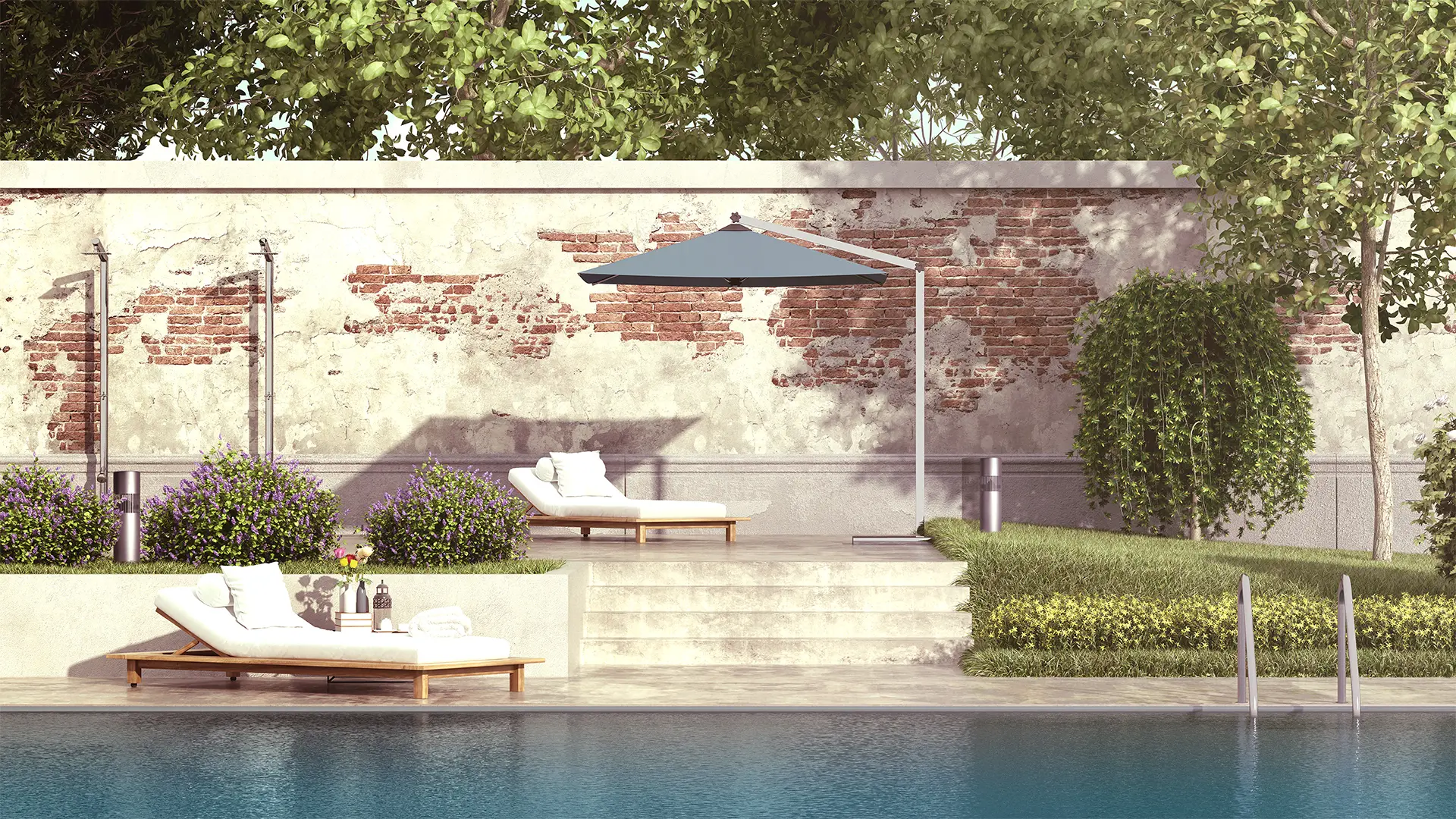
Too many gardens have a boom box in the corner: one loud speaker shouting at everyone within range. That is the opposite of what the outside wants. A garden is not a cinema you sit in front of and shut up for. It is a place for conversation, for a book in the afternoon, for a pool party with the family. What it needs is not a loud speaker but a sound blanket: warmth, real bass, and even coverage at a low, easy volume, laid gently over the whole space.
Several discreet, well-placed sources, each doing a little, will always beat one loud box doing too much. Spread properly, they wrap the whole terrace or garden in even, natural sound, so it feels present everywhere and aggressive nowhere. Add bass that is designed to survive in the open, and the garden finally sounds as full as the living room, without ever shouting.
And there is a courtesy built into doing it this way. Aimed, even, disciplined sound fills your garden, not your neighbour's. Good outdoor audio is a good neighbour.
Built for weather, or it dies in a season
Outside is also hard on equipment, and this is where cheap outdoor sound fails fast.
Rain, sun, frost, and near the coast the salt in the air, will destroy anything not built to live out there. Real outdoor audio is engineered for permanent exposure, properly sealed and, by the sea, marine-grade. Anything less looks fine in spring and is a corroded disappointment by autumn.
The garden is the next room
Regular readers will know the idea: the garden as a room, lived in long after dark. Light brought it back at night. Sound is what makes you stay.
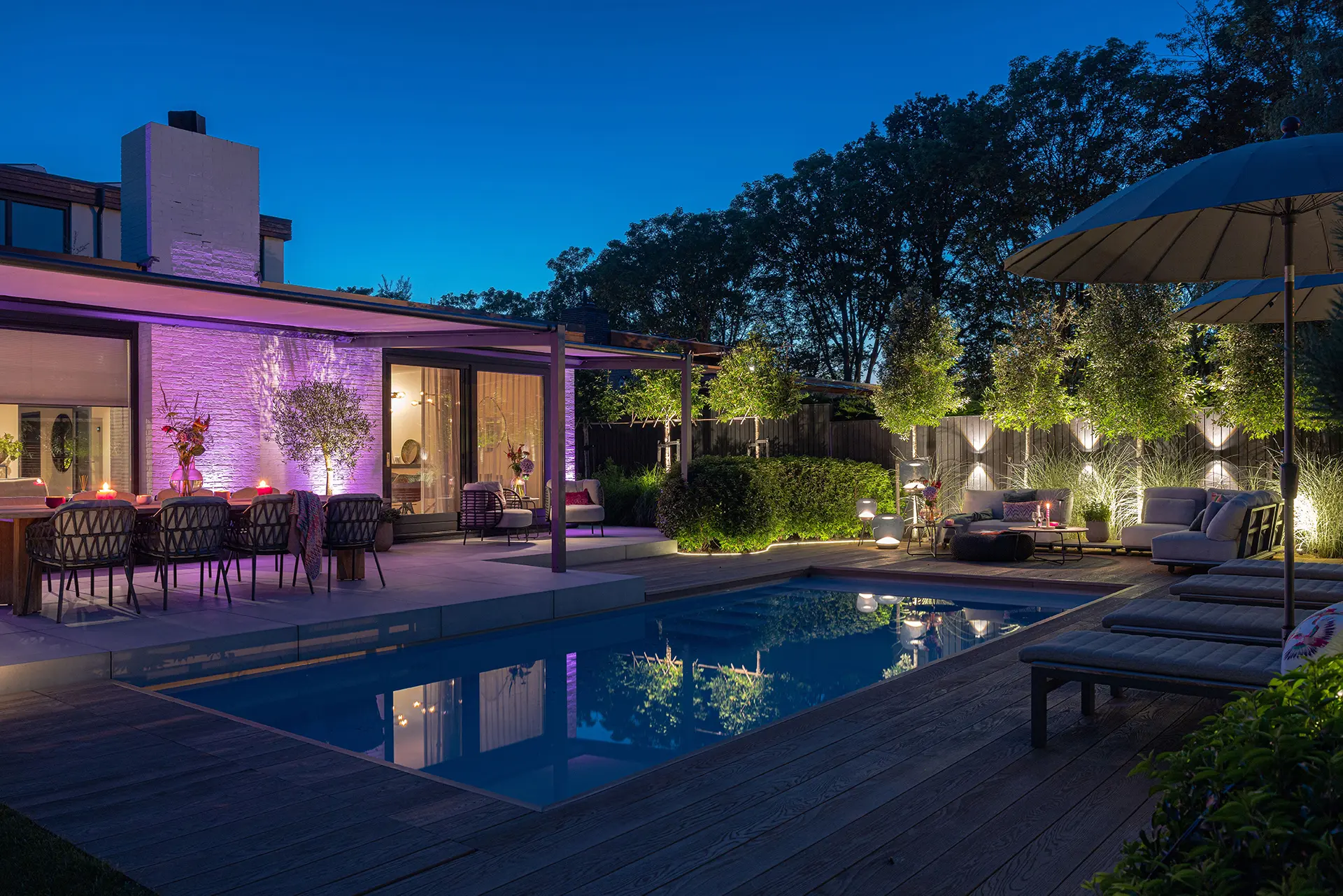
Treat the outside the way you treat the inside. The terrace is one gentle zone, the dining area another, the pool another, each with the right sound for how it is used, just like the rooms indoors. The home simply extends past the glass.
One home, one sound, inside and out
The real magic is continuity. One home, one sound, inside and out.
The same system, the same music, following you from the kitchen through the living room and out onto the terrace without a break and without a second app. The evening flows outside and the sound flows with it. Walk back in later and it is still there, seamless. Inside and outside stop being two different places and become one home that happens to have a sky in part of it.
That only happens if it is designed as one system from the start, and if the cabling goes in before the terrace is laid and the garden is planted, exactly like outdoor lighting. Decided early, it is simple. Left till the end, it means digging up what you just built.
The point
The home should not end at the back door, and neither should its sound.
Cover the outside gently rather than loudly. Build it to survive the weather. Treat the garden as the next room, with its own zones and its own calm. And tie it to the house so there is one sound, one touch, inside and out. Do that, and the best evenings of the year get a soundtrack that was there all along, quietly, in your favour.
Let the home sing all the way to the end of the garden.
Let's make WOW the standard. Together.
#homesoftomorrow
The series
Part 3 of a four-part series on sound in the home:
- A Home Should Sound as Good as It Looks — why sound is a design discipline.
- Every Room Wants a Different Sound — designing audio room by room, and zone by zone.
- Bass Is Where Sound Becomes Feeling — the half of sound you feel, and the craft of getting it right (this piece).
- Sound That Follows You Outside — whole-home audio, and carrying it into the garden.
It is one idea, and it is the Genesis HTA idea: technology should disappear, so the experience can take over. We do not sell speakers. We design how a home feels, and we stay to keep it right, so it keeps elevating how you live, learn, work and play.