
We spend a year making a home beautiful to look at. The proportions, the stone, the glass, the light. Then someone puts on a piece of music, and the beautiful room sounds like a bathroom. Harsh, echoing, thin. All that care for the eye, and none for the ear.
We design for the eye and forget the ear
A room is not only something you look at. It is something you are inside of, and most of what you feel in there, you hear. The hush of a calm space. The warmth of a room that wraps around a voice. Or the hard, tiring edge of a beautiful space that was never tuned to be listened in.
You feel it the moment you walk in, even if you cannot name it. A home that looks perfect and sounds terrible is only half designed.
The modern home is an acoustic problem
And here is the awkward truth: the way we build now makes it worse.
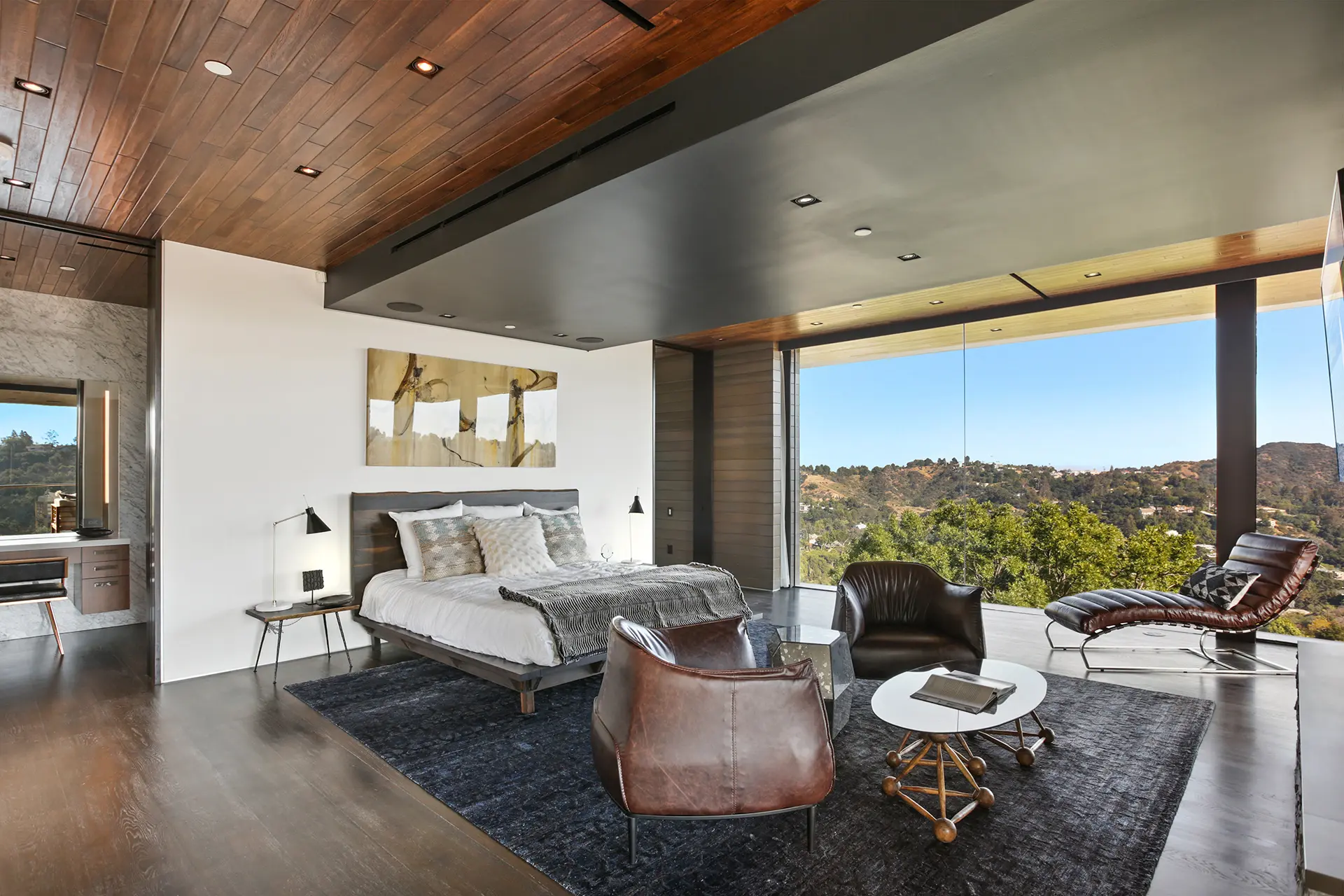
The look everyone wants, open plan, high ceilings, glass, stone, polished concrete, hard floors, is beautiful to the eye and brutal to the ear. Every hard surface throws sound back. Voices bounce, music smears, the television needs turning up just to be understood. The more minimal and magnificent the room, the harder it usually is to listen in.
So the better the architecture looks, the more it needs sound designed on purpose. Not as an afterthought. As part of the room.
Good sound is not loud sound
Here is the shift in thinking, and it surprises people.
Great home audio is not about volume. It is about control. Sound that is even everywhere, so you do not walk from a wall of noise into a dead spot. Sound that is natural, not shouting. Sound that fills the space you are in and stays out of the rooms you are not. Done well, you stop noticing the speakers, the volume, the technology, and you notice only the music, or the film, or the voice of someone you love across the kitchen.
The goal is not a louder room. It is a room that disappears, and leaves only the experience. Same idea as the light, and the invisible screen: the technology serves the feeling and then gets out of the way.
The fix is simpler than you think
When a room sounds wrong, people rarely say "the reverberation is too long." They say the room feels cold. That is the tell. Bad acoustics are a feeling long before they are a measurement, and the fix is usually just as human.
It mostly comes down to two simple moves.
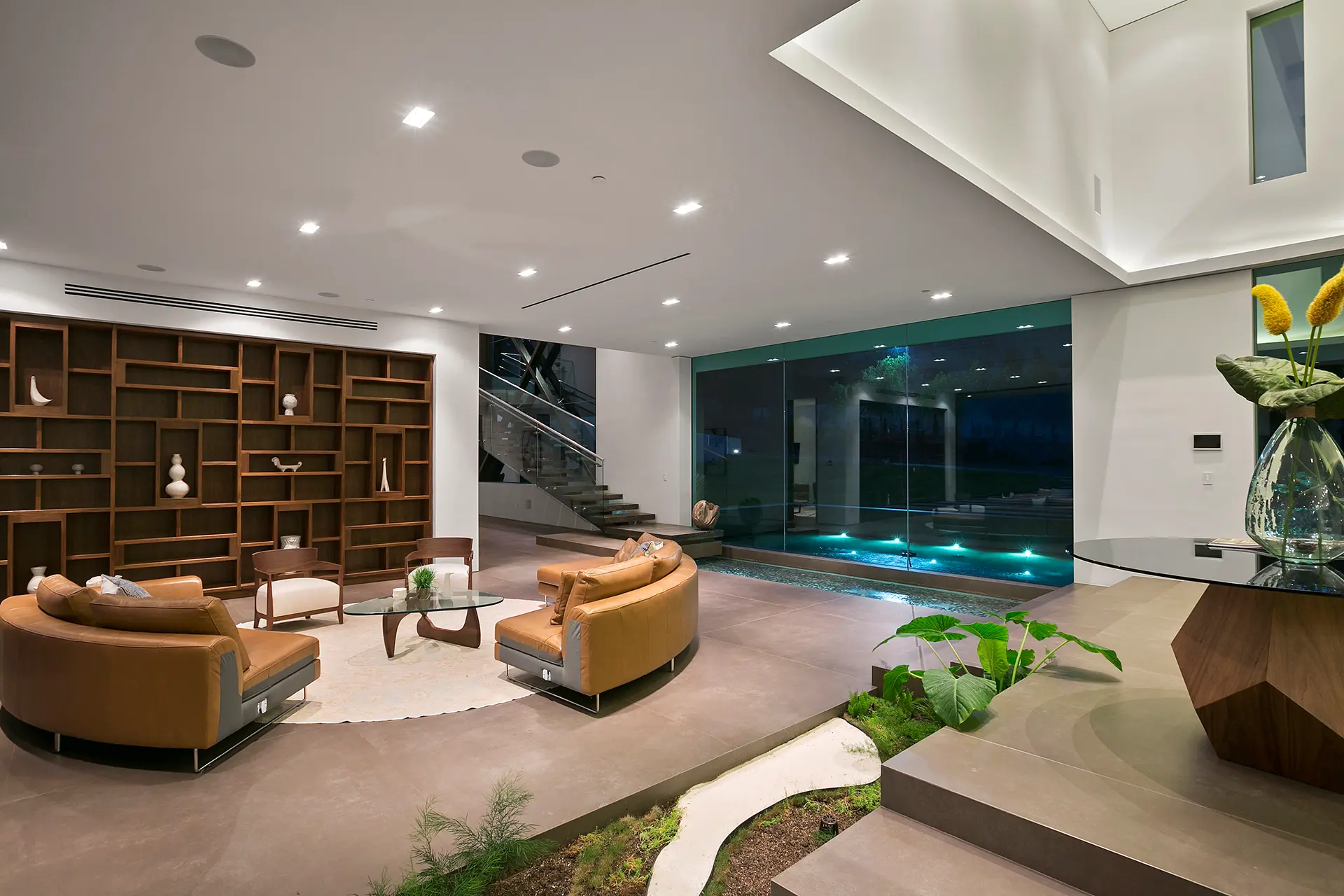
The first is absorption: soften the hard surfaces so sound stops bouncing around. Much of this you furnish rather than engineer, a rug on the stone floor, sofas and chairs in fabric rather than hard leather, curtains at the glass, a bookshelf that is actually full. Where a room needs more, acoustic panels finish the job, and they get to choose how they behave: disappear, blended invisibly into the wall or ceiling, or step forward on purpose as something beautiful, art that also happens to calm the room.
The second is diffraction: break the sound up so it scatters gently instead of slapping straight back at you. This too can be simple. An open, well-loaded bookcase on the wall facing the speakers. A room that is not a perfect symmetrical box. A little deliberate asymmetry in the shapes and surfaces. Nothing exotic, all of it quietly doing the work.
It is the same craft as lighting
And here is the part that should feel familiar, because it maps onto light almost one to one.
Light is the first thing you feel in a home. Sound is the other one. They are the two things you feel most in a room, and it turns out they are very nearly the same craft wearing two coats.
Adding absorption is like adding darkness. In a beautifully lit room you do not flood every corner; you take light away in the right places so the rest can breathe. In sound you take energy away in the right places, for exactly the same reason.
Playing with diffraction is like playing with shadow. Shadow is what gives light its depth and drama. Scatter is what gives sound its ease and space.
That is no accident. A speaker and a light source behave in remarkably similar ways, and so do the systems that run them. Which is why whoever designs one well tends to design the other well, and why the two belong together on the same drawing.
A waltz, not a tango
So yes, this is designed, not bought. But do not picture something difficult.
The dance between great sound and great design is an intimate one, and a surprisingly simple one. Done well it is a waltz between the architect and the technology architect: two people moving to the same rhythm, anticipating each other, never lurching. Not a tango of abrupt compromises and last-minute fixes. There is no voodoo in it.
And done early, it rarely costs a real trade-off at all. The painful compromises, the visible speaker nobody wanted, the room that had to be "fixed" after the fact, come almost entirely from starting late. Work with the end in mind, and the sound and the space get designed together, so the compromises never appear.
This co-creation matters for light. It matters even more for sound, because acoustics reach further back into the build. A few simple principles, settled early, quietly shape the materials, the surfaces, the orientation and the layout of the room itself. Leave them to the end and you are negotiating with walls that are already closed. Bring them in at the start and the room is beautiful and sounds beautiful, by design, with nobody giving anything up.
Anyone can sell a speaker. Designing how a home sounds, together with the people shaping the room, is the craft. And that is exactly where the value is.
The point
We would never light a home by accident, or finish it by accident. We should stop letting it sound like an accident.
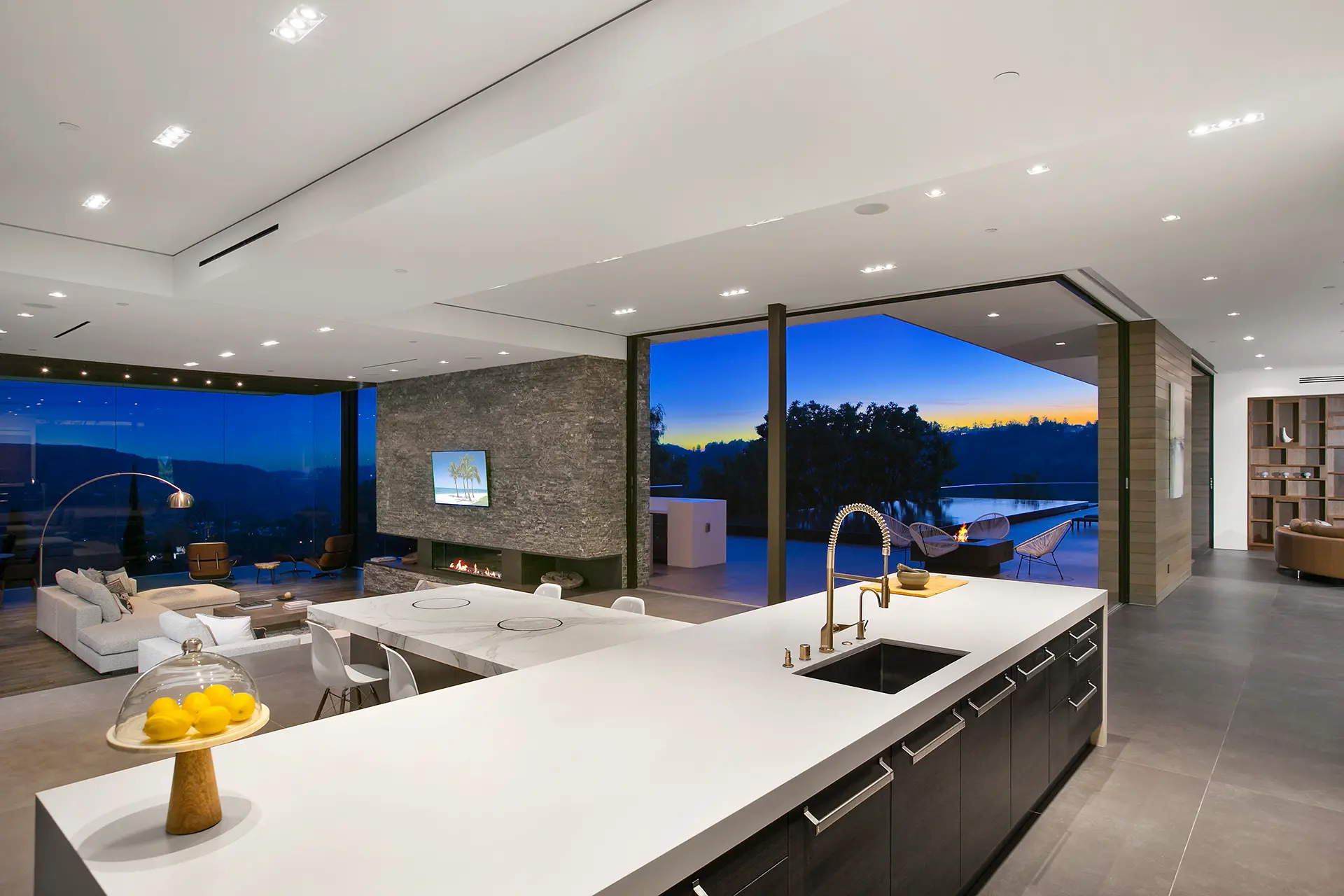
A home should sound as good as it looks. That means treating audio as a design discipline: planned early, alongside the architect, tuned to the room with a few simple moves, and woven in so the technology disappears and only the experience remains. No voodoo. Just the end, kept in mind from the start.
Design the room to be seen. Then design it to be heard.
Let's make WOW the standard. Together.
#homesoftomorrow