
Image: Genesis HTA VIP Lounge Barcelona, Spain
The TV is the most commoditised box in the home. Every year they get bigger, thinner and cheaper, and every year the margin gets closer to zero. One click, one price, one race to the bottom. As a product to sell, the television is a dead end.
And yet the television might be the best conversation a professional can start.
Here is the twist the box-movers miss. The TV is where the project begins, not where the margin lives. The screen is cheap. Everything that makes it worth watching is not.
The bigger it gets, the more it needs a professional
Screens keep growing. Ninety-eight inches is now normal in a serious room. Past a hundred, you leave televisions behind entirely and move to direct-view LED, a wall of light delivered, built and calibrated on site. That is not a product you unbox. That is pure professional work, start to finish.
The latest generation makes the point louder. The newest large-format screens are built to hide, retracting into the ceiling or folding flat against the wall, and they arrive paired with invisible speakers and hidden subwoofers because the panel alone was never going to carry the sound. Even the tools to design them are built for professionals, not shoppers. This is a class of product a homeowner cannot buy, unbox or place. It exists only because someone with skill puts it there.
Even below that line, size changes everything. A large screen has to be carried, lifted and placed by people who do it for a living, not wrestled up a staircase by two friends and a prayer. It has to be mounted dead flat, dead level, on a wall built to hold it. And most of the time, in a home that cares how it looks, it has to disappear when it is off.
Hiding a big television is a craft. Backlit and flush in a niche, motorised lifts, art modes, panels that slide, frames that vanish into the millwork. None of that comes in the box. All of it is designed early, by a professional, before the wall is even closed.
The thinner it gets, the worse it sounds
Physics does not care about industrial design. As screens get thinner, there is less and less room inside for sound. The picture keeps getting better. The audio keeps getting worse.
So the better the television, the more it demands real sound around it. A soundbar at the least. In a proper room, invisible speakers in the wall, a hidden subwoofer, sound that fills the space and has no visible source. The flatter the panel, the bigger the audio opportunity.
And once the screen is large enough to pull you in, the rest of the room has to rise to meet it. Immersive picture wants immersive sound. Immersive sound wants the light to drop and the shades to close on cue. Suddenly one television is a room: video, audio, lighting and shade, all moving together. That is not a purchase. That is an experience, and experiences are designed.
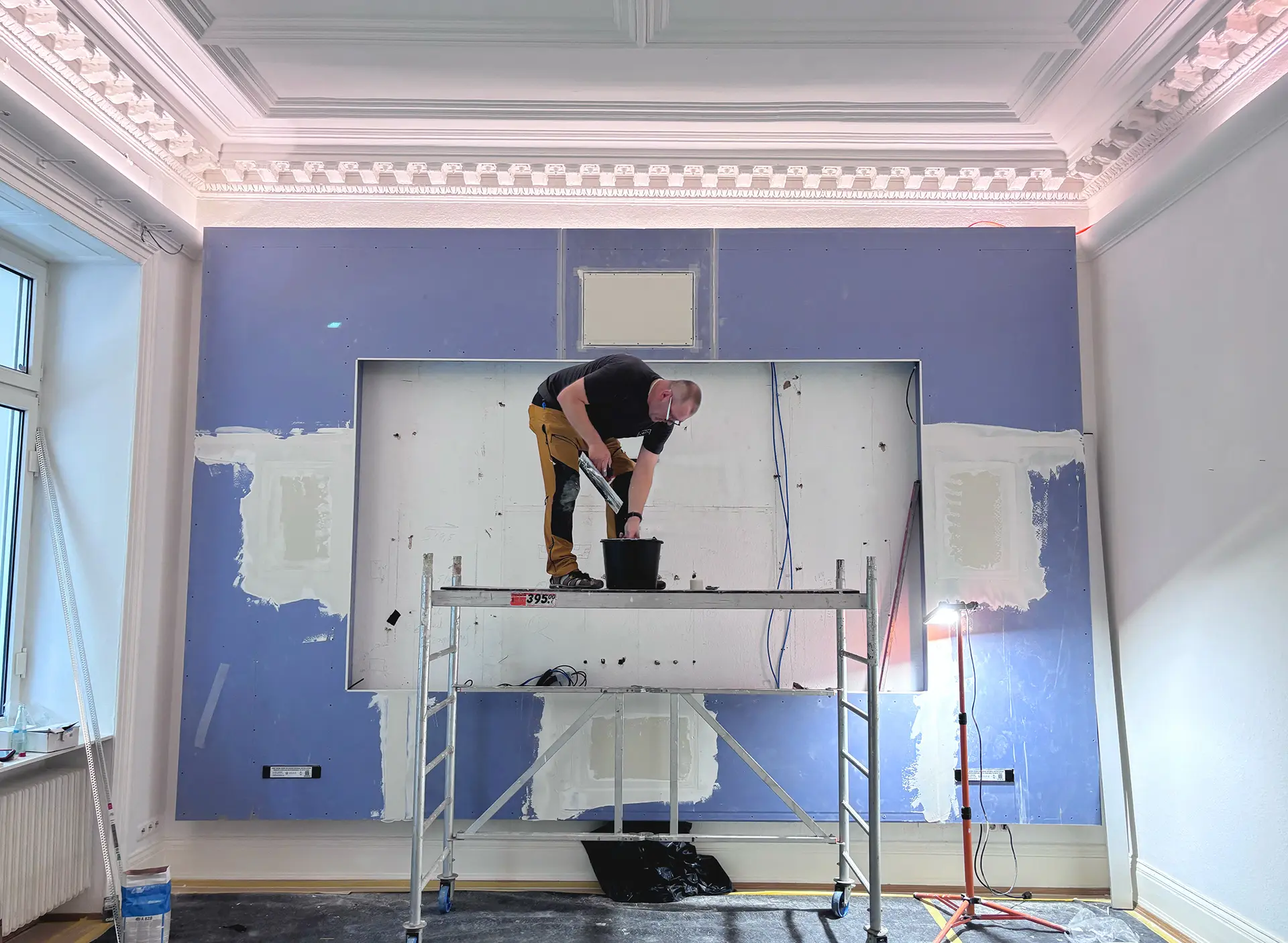
Image: Invisible sound installation for a large screen project
The screen is the doorway to the system
Watch what actually happens after the television goes on the wall.
The client wants their apps. Then they want the apps to be easy. Then they want one remote instead of five, one tap instead of a drawer full of clickers. That pull, from a screen, to a simple experience, to a control system that runs the whole room, is the most natural upgrade path in the home.
The television is the doorway. What is behind the door is the actual business: the sound, the light, the shade, the control, the network that carries it all, and the professional who ties it into one home that just works.
Nobody upsells their way there. It happens because a big beautiful screen quietly exposes everything around it that is not yet good enough.
"The television is where the project begins, not where the margin lives."
So where is the money?
Not in the box. The box is the easy part, and the easy part is a commodity. Only a rare premium name still holds a real margin on the television itself, and even there you are paying for design and integration, not for the panel.
The money, and more importantly the value, is in everything the television sets in motion. The design of the wall it hangs on. The concealment when it sleeps. The sound that makes it worth watching. The light and shade that turn a screen into a cinema. The single, simple control that makes it all effortless. And the professional who owns that whole outcome, not the one who quotes the last panel.
The product is the easy part. The promise is the hard part. The television proves it perfectly. Nobody will pay a premium for the screen. Everybody will pay for the room it unlocks.
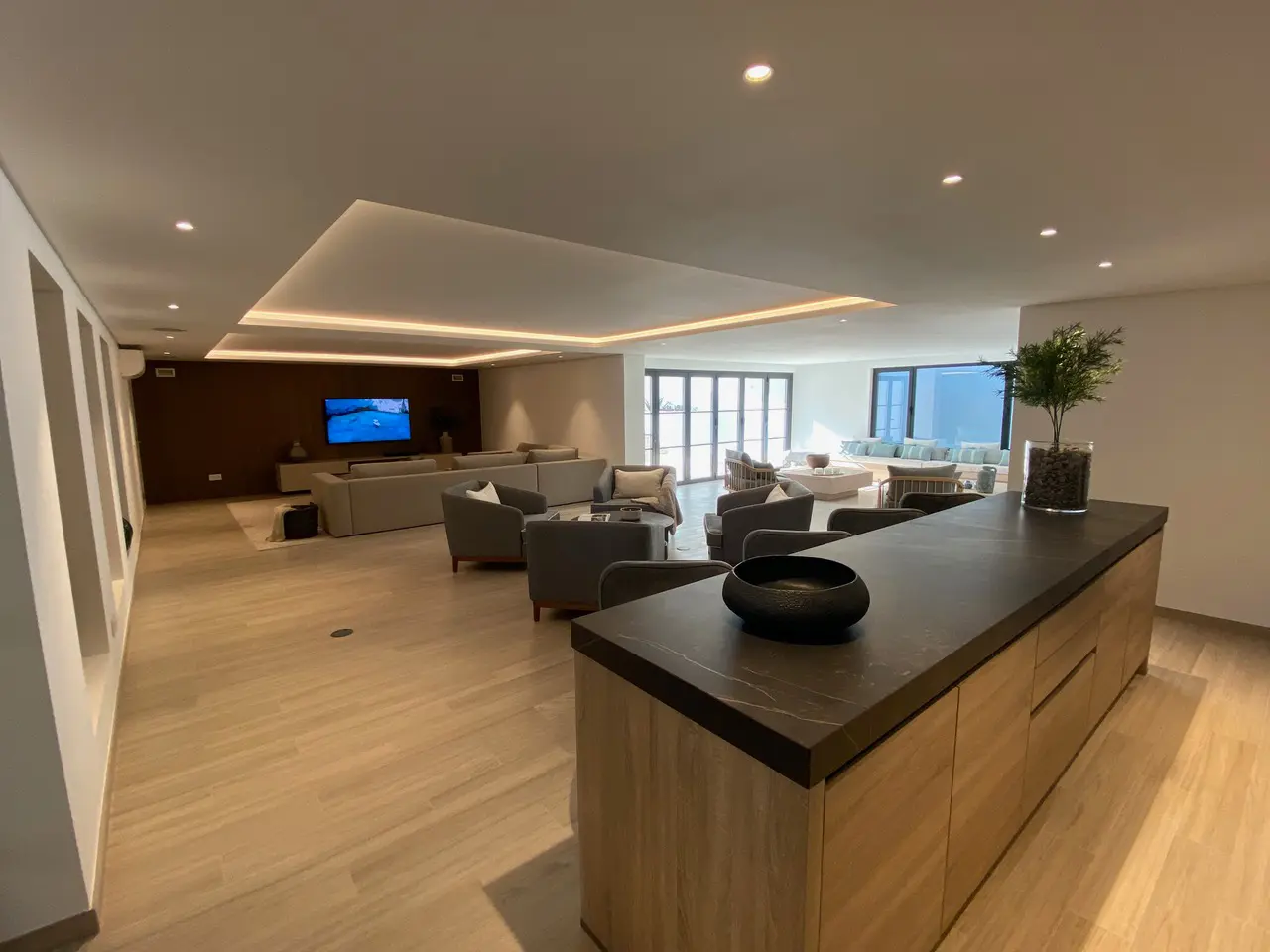
Image: Home automation project by CPD Sound & Vision, Portugal
The point
There is no money in televisions. There is real, lasting business around them.
So do not sell the box. Use it. Let the screen start the conversation, and design the home it points to. That is the difference between a shop and a Home Technology Architect, and it is the difference between a sale and a home that keeps its promise for years.
The best screen in the world still disappears into a room someone designed. That someone is where the value has always been.
Let's make WOW the standard. Together.