
The trade press prints the trends. Bigger screens. Video walls. Immersive everything. And the instinct is to run at the biggest number on the page. More of the hot thing. Faster.
That instinct is expensive. The category growing fastest is almost never the one paying best. Chase the trend and you win a pile of volume on the thinnest margin in the business. Busy, and broke.
Let me show you why, and then show you the one category where it does not hold true at all.
The fastest-growing thing is a commodity
Look at what is surging. Large-format televisions. Up for two thirds of integrators, down for nobody. Screens get bigger and cheaper every year, and clients want them.
Great. Sell them. But be honest about what a big television is. It is a commodity. The price falls every year, anyone can order one, and the margin on the box is heading for zero. That is not a knock on the product. It is the nature of anything easy to buy.
And that is the rule the whole trade should tattoo on the wall: the moment something is easy to buy, it stops being profitable to sell.
The money hides in the thing that has to be designed
So where does the margin go? To the work that cannot be ordered.
Not the box. The project. The screen brought properly into the room. The sound built to match it. The light and shade that move with it. The whole thing designed to feel like one experience instead of five gadgets fighting each other.
A client never asked for five products. They asked for a feeling: a room that wraps around them, a home that just works. You get paid for turning that wish into one designed system. That is craft, and craft does not commoditise, because a price war has nothing to cut.
The proof: the speaker you cannot see
Now the exception, and it is the clearest one we know, because we have lived it for fifteen years.
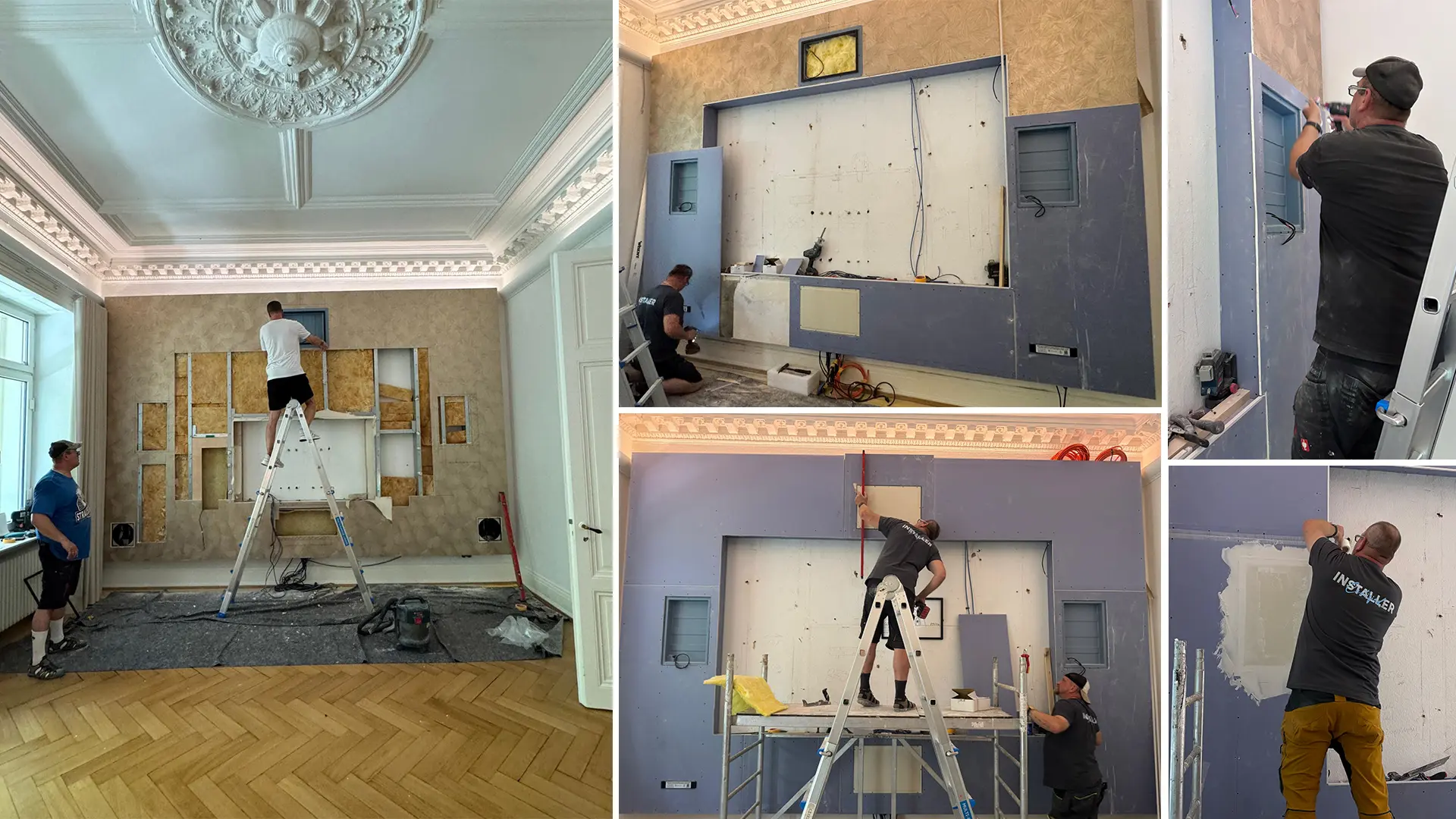
Invisible speakers. Audio that installs behind the wall or the ceiling and finishes flush with the surface, painted or plastered straight over. No grille, no box, nothing to see. We make the walls sing. It is the purest form of the whole idea: technology that disappears and leaves only the experience.
Here is what fifteen years of selling it has taught us. This is not a niche winding down. It is a category still growing fast, year after year, in every market we serve. The runway ahead is enormous, because once a client has heard a beautiful room with no speaker in sight, they never go back to boxes on the wall.
And it breaks the rule in the best possible way. Invisible audio is growing fast and it holds its margin, at the same time. That almost never happens. Here is why it does.
You cannot price-shop a speaker you cannot see. There is no box to compare on a website, no model number to beat down on price. What the client is buying is the design, the craft of making sound appear from nowhere, and craft does not get commoditised.
Then comes the part that still surprises people. When a client cannot see the speaker, they want more of them, not fewer. More rooms. More zones. Sound that follows them through the whole house, invisibly. The thing you cannot see does not shrink the project. It grows it. A visible speaker is a compromise a client tolerates in one room. An invisible one is a luxury they want everywhere.
This is why we keep saying it: invisibility is a superpower. The less the client can see, the more they want, and the harder it is for anyone to compete with you on price. Fast growth, margin that holds, and a client who keeps asking for more. That is as good as this business gets, and it is hiding in plain sight. Or rather, in no sight at all.
The move
So do not read the trend list and sprint at the biggest number. That road is busy and thin.
Sell the big screen, of course, it gets you in the door. But win the work that has to be designed. And of everything on the board, go hard at invisible audio. It is the fastest-growing thing we sell, it holds its margin because no one can see it to price it, and every room you do quietly sells the next one. (The same logic is opening up outdoors now too, where the garden is the least-designed room in the house. A story for another day.)
One experience. One system. One professional who owns it. The trends will turn over again next year. The speaker you cannot see will still be growing.
Let's make WOW the standard. Together.
Sources: Market and category-demand figures from CE Pro's 2026 Immersive Home Entertainment Deep Dive survey. Growth reflects Genesis HTA's own experience across European markets.