
Picture the room you worked so hard on. The proportions, the plaster, the stone, the art, the light. Then picture what we usually do to it: bolt a black rectangle to the best wall, stand black boxes in the corners, plant grilled speakers across the ceiling, and trail the whole thing in cable.
We spend a fortune making a room beautiful, then fill it with technology that fights it.
There is a better idea, and it is one of the most exciting things happening in the premium home. Make the technology disappear, and keep the room.
The best technology is the one you cannot see
We call it Invisible AV: sound and vision that perform brilliantly and then vanish. No boxes to look at. No black rectangle staring back at you all day. Just a beautiful room that also, when you want it to, fills with music or comes alive with a film.
This is not about hiding cheap kit in a cupboard. It is a different intention entirely: design the experience to be extraordinary, and design the hardware to be invisible. The room stays pure. The experience is all that is left. Invisibility is a superpower.
Invisible sound: make the walls sing
Start with sound, because this is where the magic feels closest to impossible.
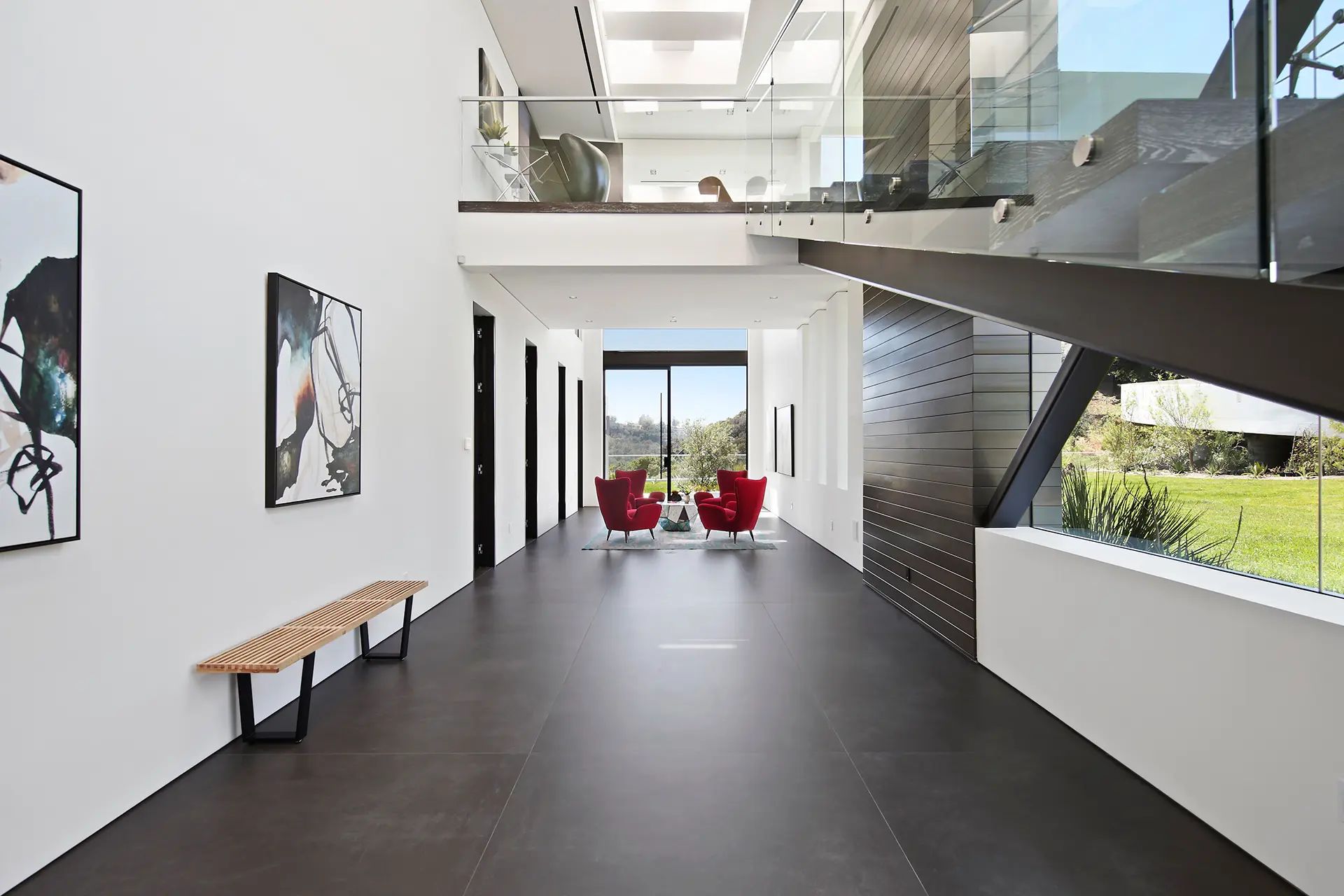
Speakers no longer have to be objects in the room. They can be built into the wall or the ceiling and plastered straight over, painted the colour of the room, gone. And then that quiet, flawless wall fills with sound that seems to come from everywhere and nowhere at once.
No boxes. No grilles. No "where do we put the speakers" conversation that wrecks the furniture plan. Just a clean room that sings when you ask it to. We make the walls sing, and the walls keep their looks.
Invisible vision: the screen that vanishes
Now the harder half, the screen.
The television has always been the great compromise of the beautiful room: a black hole on the best wall, dead and staring for the twenty-two hours a day nobody is watching it. Invisible AV refuses that trade.
The screen can fold away when the film ends. It can rise from a cabinet or drop from the ceiling on a lift. It can hide behind a mirror or a piece of art until the moment you want it. The mechanism matters less than the point behind all of them: the screen is there when you want it, and gone when you do not. The screen that stares back at the room all day is yesterday's idea.
And here is where most of our trade still gets it wrong. We sell the lift, or the folding screen, as a product, a clever mechanism, and then wonder why nobody buys. The thing worth paying for was never the mechanism. It is the room you get back. Sell the why, not the winch.
The rest of the house already did this
None of this is as radical as it sounds. Look up at the ceiling of any well-designed modern home and you will not see the heating and the cooling. You will see a thin slot, a discreet slit, and warm or cool air arriving from nowhere. Invisible climate control is simply how it is done now. Nobody puts a boxy unit on the wall unless the building leaves them no choice.
AV is the last system still fighting that logic, still asking the room to put its equipment on display. Invisible AV is just sound and vision finally catching up to what climate did years ago: disappear, and let the room be the room.
Why this belongs to the architect and the designer
Here is why Invisible AV matters far beyond the gadget press.
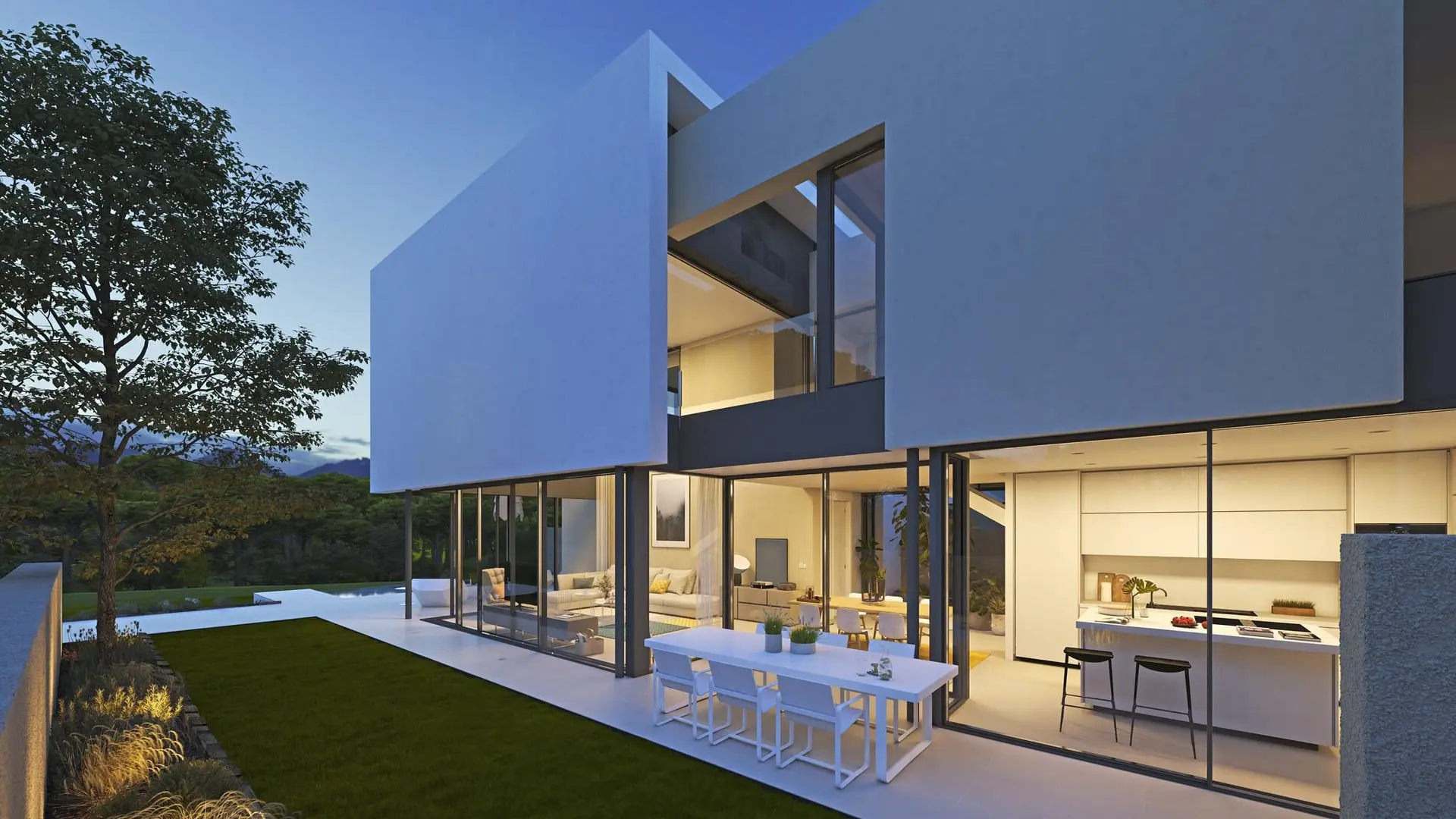
For an architect or an interior designer, AV technology has always been the thing that ruins the drawing. Lighting they design with, and love, it is technology they have long made beautiful. But the speakers, the screens and the boxes have stayed the compromise: the elevation spoiled by a grille, the clean ceiling punctured. Invisible AV removes that last compromise. The design stays intact, and the home still does everything a modern home should. It hands the room back to the people who shaped it.
And this is not a prediction. It is already the trend. Invisible and architectural speakers have quietly become one of the fastest-growing categories in the premium home, and the vanishing screen is moving the same way. The market has already voted.
The demand is coming from the top of the market. Discerning owners no longer want to see the technology. They want the experience and the calm, not the equipment. Visible kit has quietly become a sign of a job half-finished.
Invisible is engineered, not bought
Here is the part the box world will always miss. You cannot buy invisibility off a shelf.
A speaker plastered into a wall so that it disappears and still sounds superb is a design and engineering decision, not a purchase. So is a screen that folds or lifts away into the architecture. It takes the right choice for the room, the right placement, the plaster and the finish, the calibration so the invisible sound is still true, and the whole thing woven in during the build, not bolted on after.
Anyone can sell a speaker or a screen. Making them disappear is the craft. That gap, between the box and the vanishing act, is exactly where the professional lives, and exactly where the value is.
The point
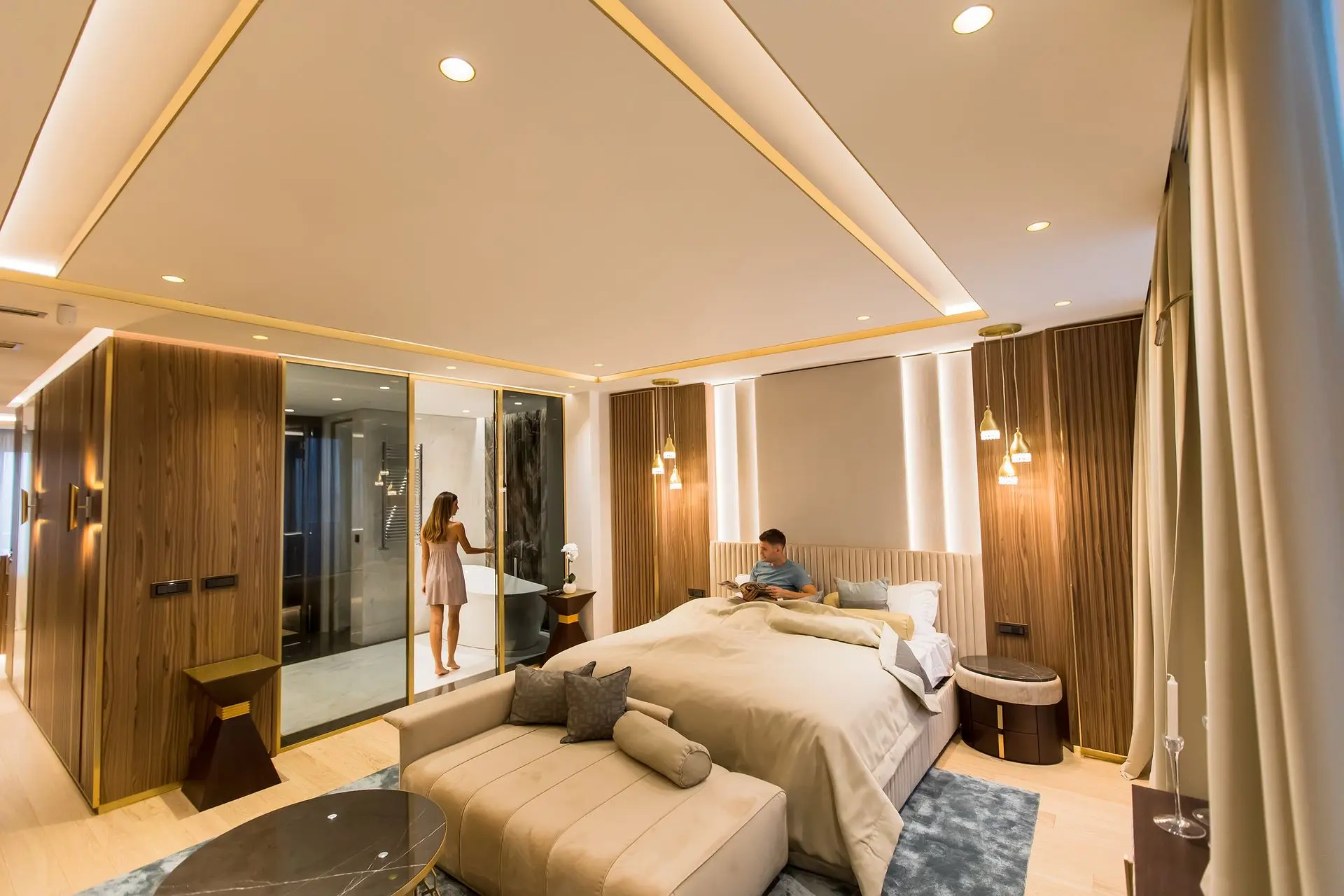
Invisible AV is the Genesis HTA idea made literal. We have always believed that technology should disappear so the experience can take over. Nowhere is that more true, or more beautiful, than here.
So keep the room you designed. Let the walls sing. Let the screen vanish. Put the experience in the foreground and the equipment out of sight entirely, and let the home go back to being a home, one that happens to do extraordinary things the moment you ask.
The best technology in the room is the technology you cannot see.
Let's make WOW the standard. Together.
#homesoftomorrow