
In the anchor piece of this series we said good light is built in three layers. Here is that framework applied to the rooms you live in every day.
The three layers, indoors
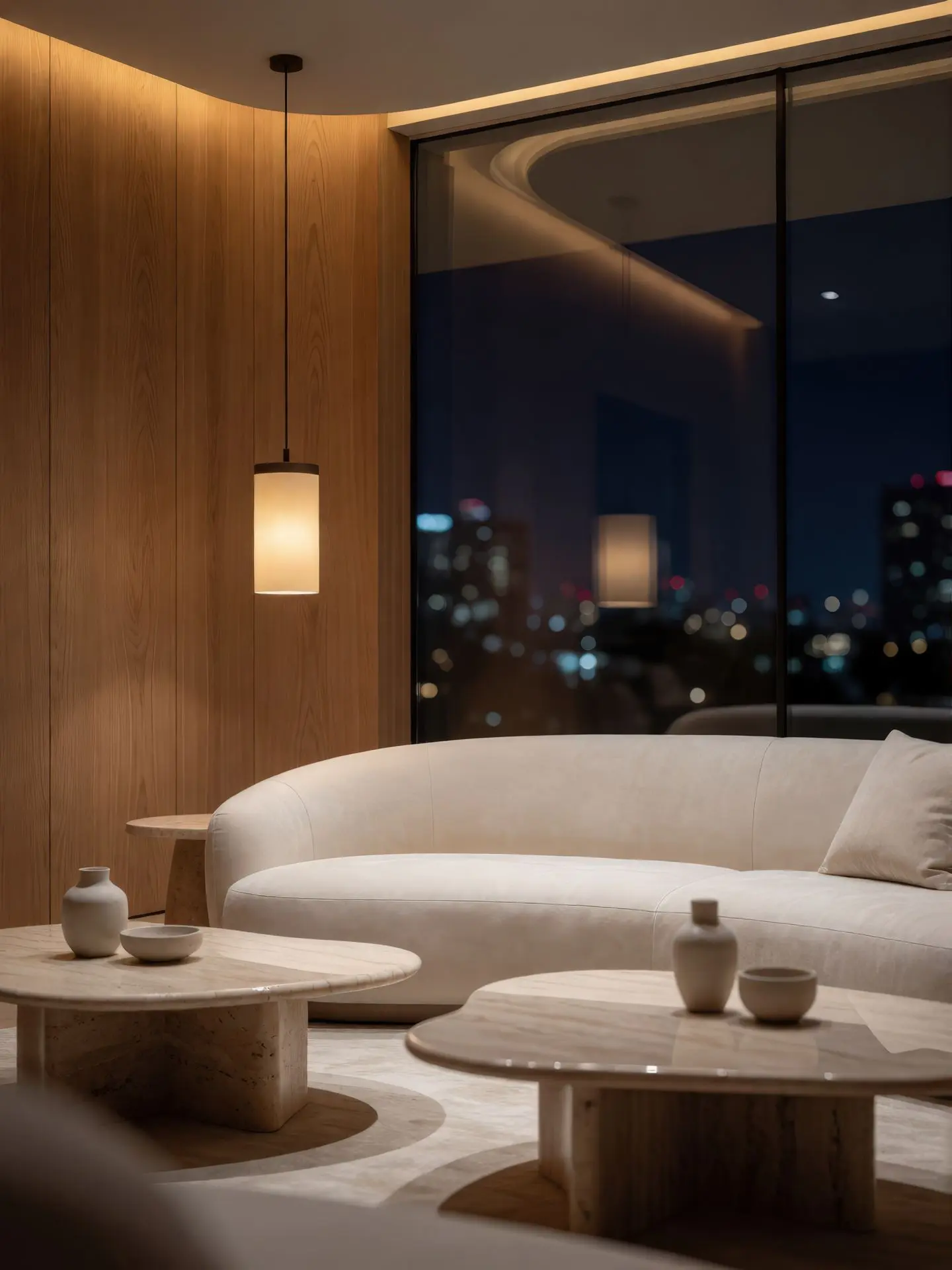
1. Ambient: the foundation
Ambient light is the baseline that fills the room. Its job is safety and easy movement: no pitch-black corners, no jarring shadows as you cross the space.
Common solutions: recessed spotlights, track lighting, a large central fixture.
The craft: aim for an even, gentle spread. For a home, stay warm, between 2700K and 3000K, inviting without turning yellow.
What it really is: the canvas. Ambient light is rarely the star. It is the ground the other two layers are painted on.
2. Task: precision and focus
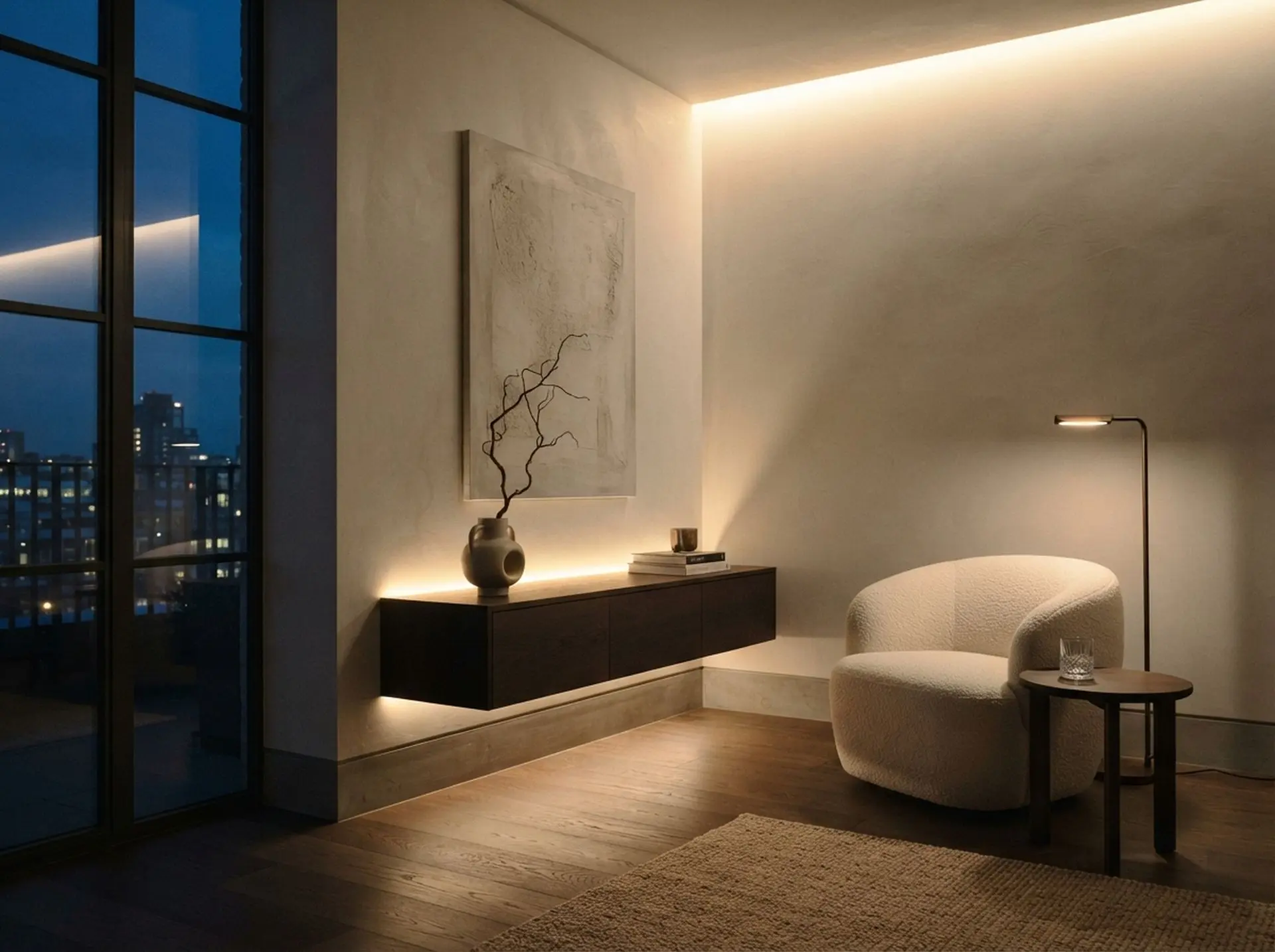
Task light is the functional layer. It supports a specific activity, reading, cooking, working, without tiring the eyes.
Common solutions: an adjustable floor lamp beside the reading chair, under-cabinet light in the kitchen, a low pendant over the dining table.
The craft: keep the source close to the activity and focused on the surface, not spilling across the whole room.
The smart part: task lights should dim. High and bright for focus during the day, low and soft for the evening. The same lamp, two completely different moods.
3. Accent: depth and character
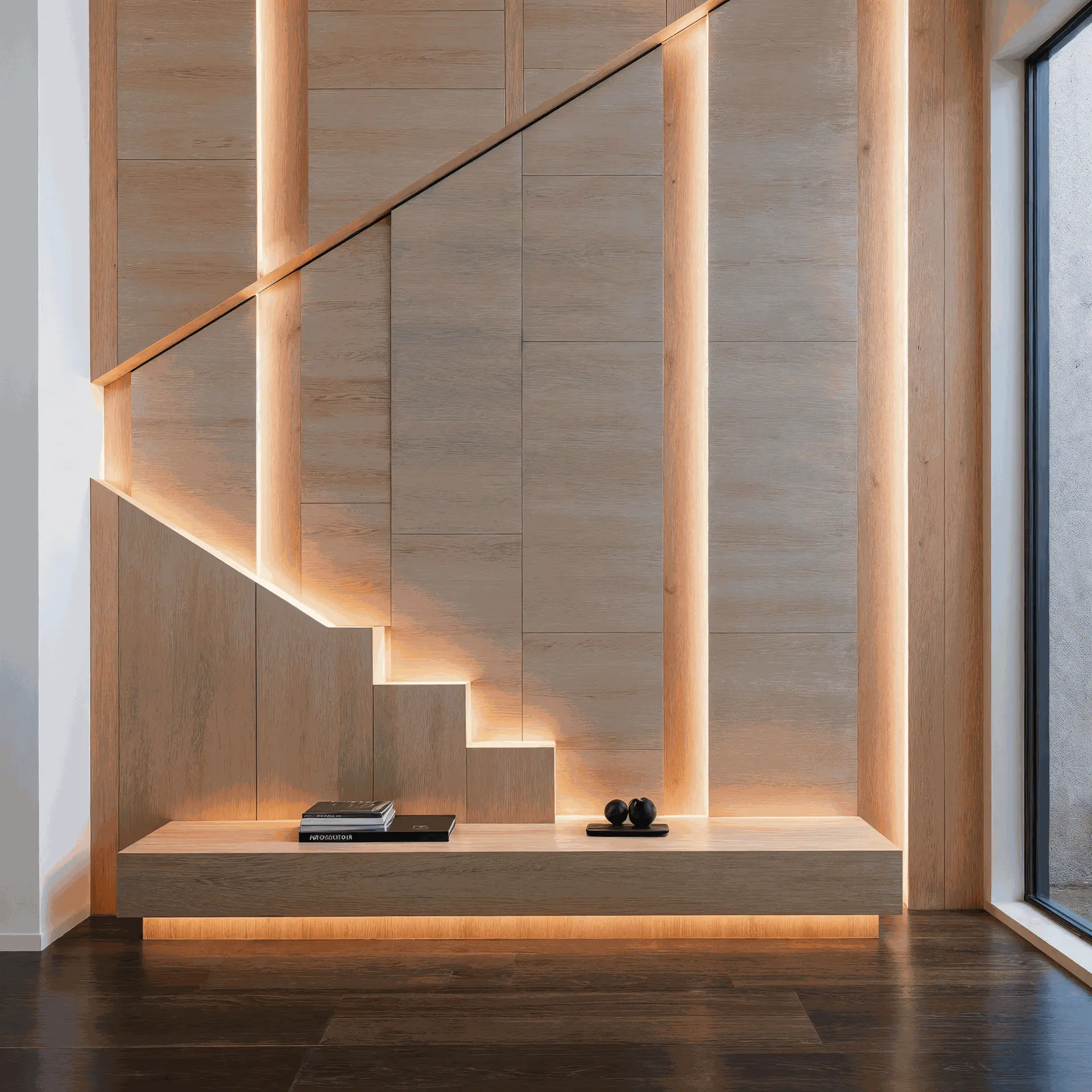
Accent light is what makes a house feel like a home. It creates focal points, picks out the architecture, and adds a softness the other layers cannot.
Common solutions: wall sconces, LED strips hidden behind furniture or in coving, a beautiful table lamp.
The craft: vary the height. Put light at floor level, at eye level, and above. That is what creates visual interest and kills the flat look of overhead-only lighting.
Where it is going: natural, tactile materials are leading decorative fixtures now, linen, rattan, ceramic, so the piece adds warmth to the room even when it is switched off.
Putting it together: the workflow
A good lighting plan is never random. Follow the sequence.
- Map the functions. Decide what actually happens in each part of the room. This corner is for reading. This island is for food prep.
- Lay the base. Position the ambient layer so the space is safe and evenly lit.
- Add the tools. Place task lighting exactly where those functions happen.
- Finish with character. Add the accent layer for warmth and texture.
The professional edge: make every layer independently switchable. In a modern home, those layers become scenes, Cooking, Dining, Movie Night, so the whole room shifts mood at a single touch.
The checklist, before the first cable
- Decide early. Fix your colour temperatures and wiring points before you choose flooring or wall finishes.
- Define the zones. Have you named every activity that will happen in the room?
- Ambient coverage. Is the general light even, or are there dead zones?
- Task placement. Is there dedicated light for the reading nook, the dining area, the desk?
- Vertical layers. Are there sources at several heights, floor, eye level, ceiling?
- Dimming. Is every circuit dimmable, so the room can follow the time of day?
- Colour consistency. Are you holding the 2700K to 3000K range for a cohesive feel?
- Switch groups. Can each layer, ambient, task and accent, be controlled on its own?
- The after-dark test. Judge the plan at night. Daylight hides the flaws that artificial light will expose.
The final touch
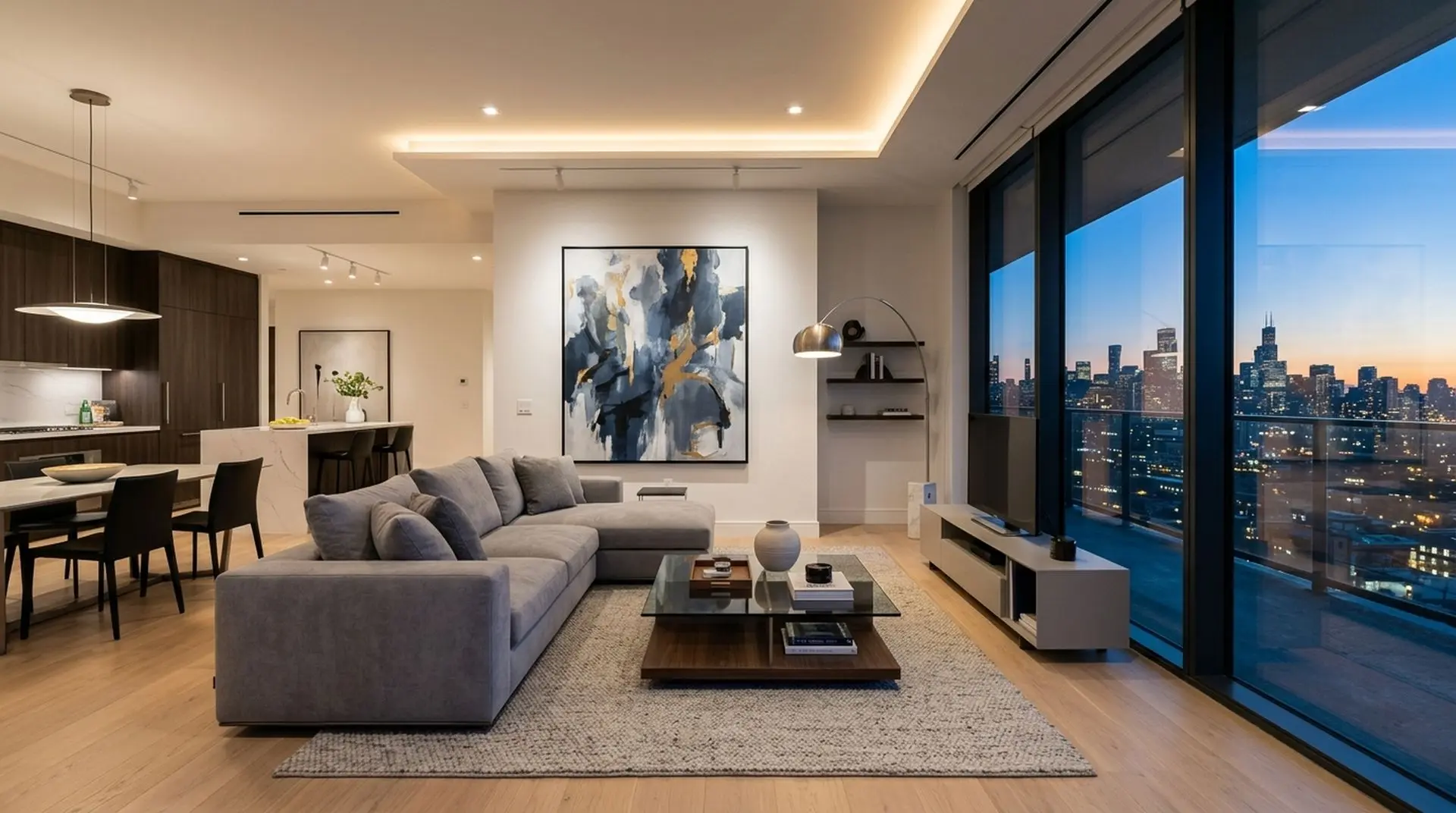
A lighting plan is not a drawing on a floor plan. It is the atmosphere your home will breathe for years.
Whether you are the professional or the homeowner, the goal is the same: flexibility. Layer the light, put each layer under its own control, and the same room can move from a bright, productive workspace by day to a calm sanctuary at night, at the touch of a button.
That is the whole point of designing light rather than just installing it.
Delivered with the craft of our design and technology partners.
This is the indoor half of the framework. For the garden, see the outdoor version of this framework.
Let's make WOW the standard. Together.
#homesoftomorrow