
Walk through a well-designed connected home and almost everything talks to everything. The light knows the hour. The shades follow the sun. The music moves room to room. The security watches quietly in the background.
And then there is energy. The one thing that costs the most, matters the most, and is changing the fastest. In most homes it is still completely in the dark. A dumb meter in a cupboard, a bill once a month, and a nasty surprise when it lands.
Energy is the last great unconnected system in the home. Which makes it the biggest opportunity left on the table.
You cannot cut what you cannot see
Start with the simplest truth in the whole subject. You cannot manage, and you certainly cannot cut, what you cannot see.
Ask most homeowners where their energy actually goes and they cannot tell you. Not by room, not by system, not by hour. The information simply does not exist for them. So every conversation about saving energy is a guess, and every guess is usually wrong.
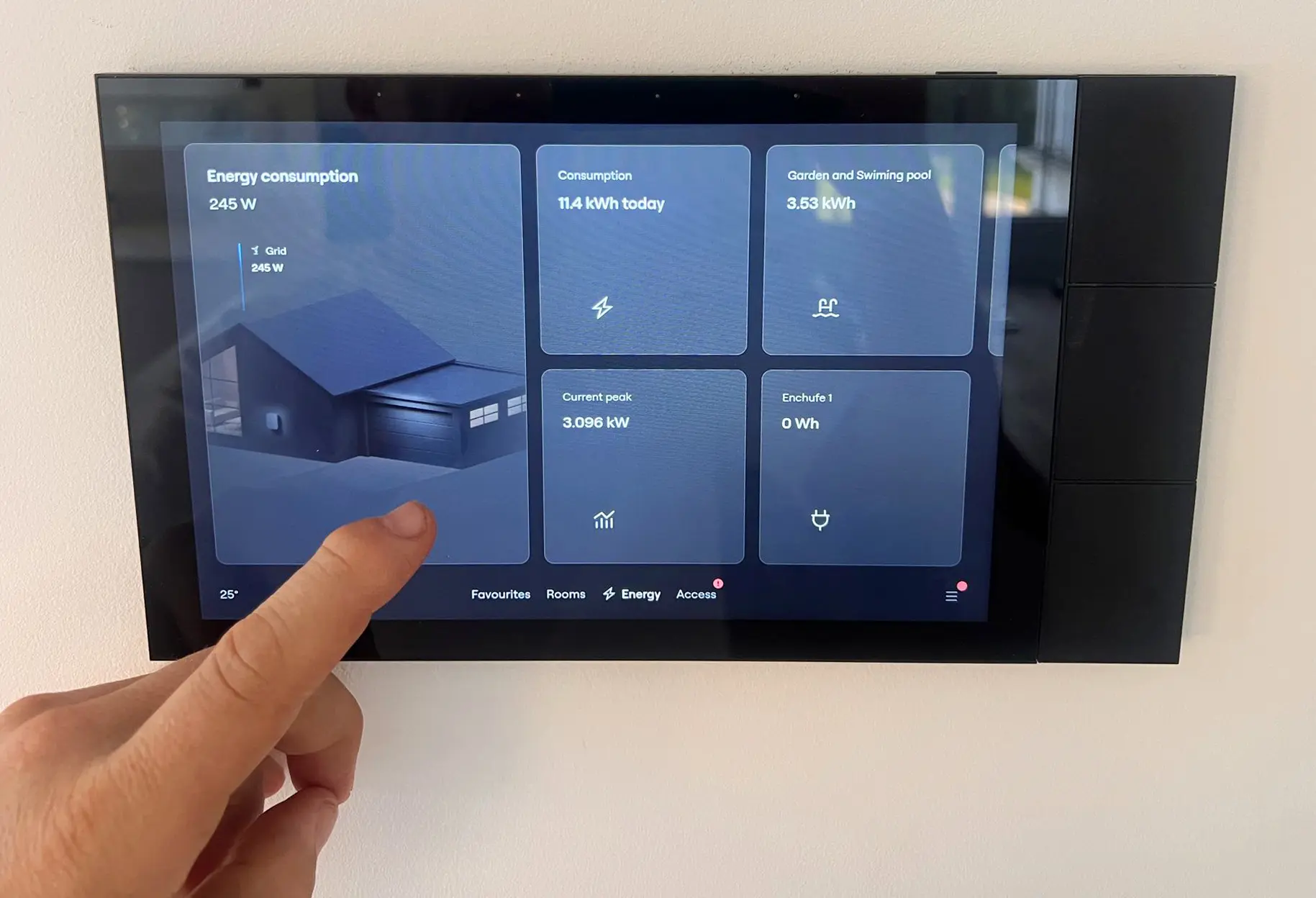
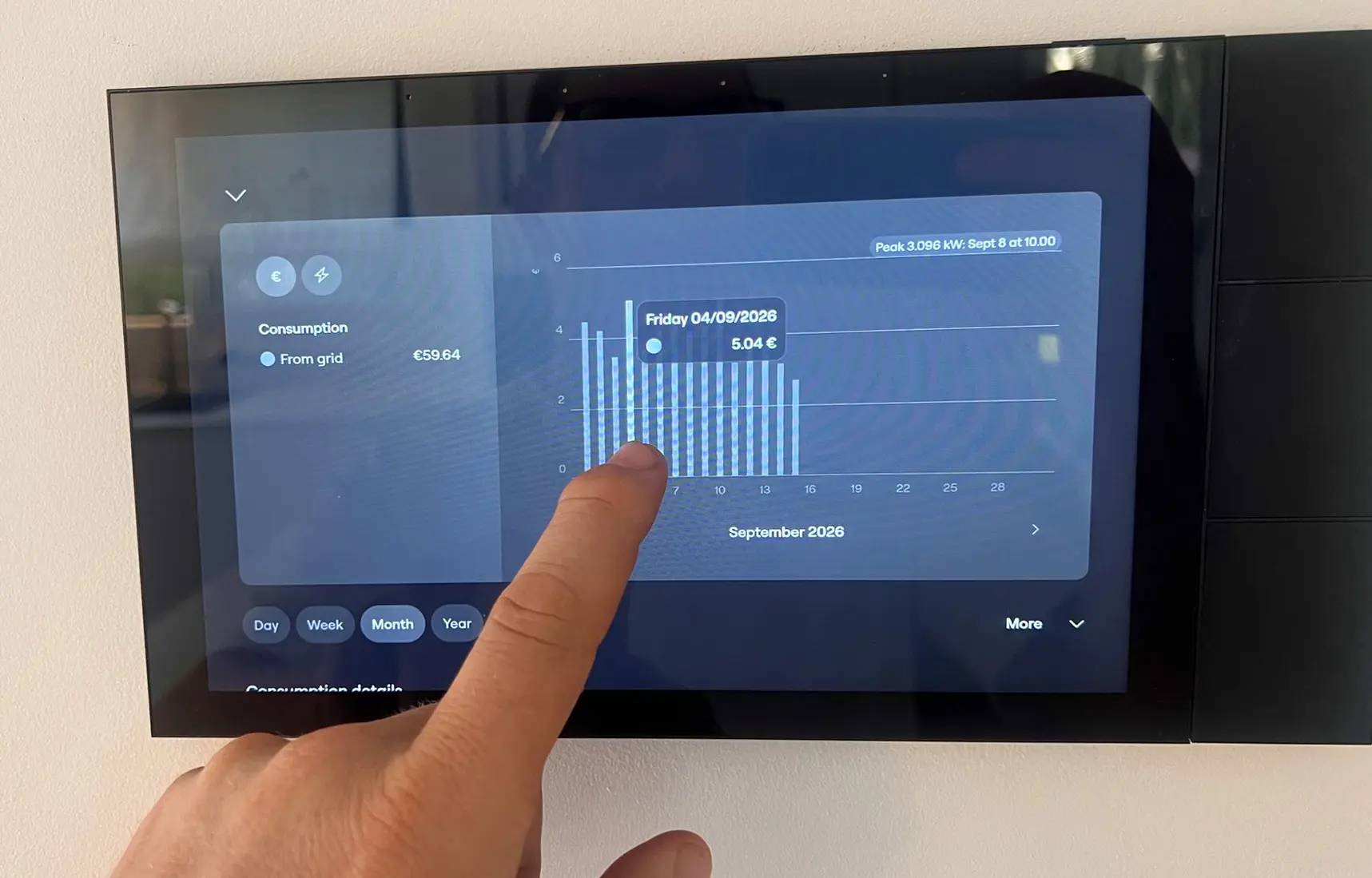
The first job, then, is not a solar panel or a battery. It is visibility. A home that shows its own energy, in real time, across every major system and source, turns a monthly shock into a daily, manageable picture. The moment a family can see where the power goes, they start to change how they use it, without anyone lecturing them.
Then coordinate the big loads
Once you can see, you can orchestrate. And here is where the real savings hide.
The biggest controllable consumers in a home are heating, cooling, ventilation and hot water. And they are changing shape fast. The gas boiler is giving way to the heat pump: aerothermal systems that pull warmth from the outside air, geothermal ones that draw it from the ground. That shift matters more than it looks, because it turns heating and cooling into electrical loads. Suddenly the most expensive thing in the house to run is part of the same system you can see, coordinate, and power yourself.
In most homes each of these still does its own thing, on its own schedule, fighting the others. The heating pushes while a window sensor says the room is empty. The cooling runs against the afternoon sun that the shades could have blocked.
Coordinated as one system, these loads save serious money without anyone giving up a degree of comfort. That is the whole point. The home gets cheaper to run and better to live in at the same time, because comfort and efficiency were never really enemies. They were just never introduced.
And this is about more than the bill. Every unit of energy a home does not waste is money saved and carbon spared. For once, doing well and doing right pull in the same direction: the home that is cheaper to run is also the one that is kinder to the planet. That alone would be worth building for.
Then use your own power, on purpose
Now add what the home makes itself. Solar on the roof. A battery in the garage. A car in the drive that is really a battery on wheels.
Most homes with panels still buy back power at the wrong time and sell their own too cheaply, because nothing is coordinating it. The opportunity is self-consumption: store when the sun is high or the grid is cheap, spend when you need it, run the heat pump and charge the car at the right hour, and lean on your own energy before you ever touch the grid.
Notice what does the work here. Not the panel. Not the heat pump. The intelligence. The hardware makes the energy. The system decides what to do with it, and the deciding is where the value lives.
Simple, or it does not get used
Here is the part our industry keeps forgetting, and it matters more with energy than with anything else.
If it is not simple and intuitive, it does not get used. It becomes dead matter: an expensive box no one touches, a sunk cost that saves nothing. A clever energy system that needs a manual is a failed energy system.
So simplicity cannot be an afterthought. It has to be designed in from the very first decision, so the home almost runs itself and the family gets the benefit without having to become engineers. The best systems make the smart choices for you, quietly, in the background. Energy is where simplicity has to win, because a home only saves what its people actually let it run.
This is no longer optional
Two forces are turning all of this from a nice extra into an expectation.
The first is cost. Energy has become one of the largest and least predictable lines in running a home, and that is not reversing. The second is regulation. Across Europe, the rules on buildings and energy are tightening, and the direction is unmistakable: homes will be expected to understand and manage their energy, not just consume it.
Design a premium home today without an energy strategy and you are building in a problem that only gets more expensive and more visible every year.
This is a co-creation, not an install
And here is the shift in thinking that matters most. Energy is not a technology problem to hand to an installer at the end of the job. It is a co-creation, and it starts at the drawing board.
The homeowner, who knows how they want to live. The architect, who shapes the light, the orientation, the space. The builder, who puts in the fabric and the systems that hold the heat and let the home breathe. And the technology architect, who makes it all see, think and work as one. Get those four around the table early and energy becomes part of the design. Get them there late and you are patching a problem you built in.
This is not a fight over who owns the project. It is a symbiosis. Each trade makes the others better, and the family ends up with a home that was designed as one thing, not assembled from four.
Our industry has too often missed this, because it grew up moving boxes at volume to the installer, and worrying about the relationship almost never. Energy is the system that finally makes the case for the other way. It cannot be solved with a gadget. It is a whole-home orchestration problem, decided at project level, sitting on the network and the control layer a good professional already builds. And it is the opposite of a one-off: energy is watched, tuned and improved over the years, which is a reason to look after the home for years, not walk away after the install.
In other words, energy is our whole thesis in a single system. One home, one design, every trade pulling the same way, and an architect who stays to keep it working.
And this is not the future. It is now.
Let me be personal for a moment, because it matters. None of this is science fiction. None of it is waiting on some breakthrough still stuck in a lab. It is here, and it works.
I live with it every day, in my own home. At a glance I can see what the house is using, where, and what it is costing me. The system makes most of the smart calls on its own, quietly, without me having to think about it. It is the difference between guessing and knowing, and once you have it you do not go back.
What genuinely surprises me is how few people live this way yet. The technology is ready. The case is obvious. The gap is not the product. It is that almost nobody is designing homes this way, on purpose, from the start. That gap is exactly the opportunity.
The point
The home of tomorrow does not just consume energy. It sees it, keeps it simple, coordinates it, and uses its own first.
You cannot cut what you cannot see. So make it visible. Keep it simple enough that it actually gets used. Orchestrate the big loads as one system. Put the home's own power to work on purpose. And design it together, from the first sketch, never bolted on at the end.
Do that, and energy stops being the frightening bill in the cupboard and becomes what it should be: another part of the home that simply works, quietly, in your favour.
This is more than a saving. It is a chance to build a better tomorrow: homes that are cheaper to run, better to live in, and lighter on the planet. That is worth designing. And, let us be honest, it is a very good business to be in.
The last unconnected system is the next one worth designing in.
Let's make WOW the standard. Together.
#homesoftomorrow